
Running on Kingston's Hope Road
It was a volatile time in Kingston, Jamaica in 1980. I traveled there in July to experience the Reggae Sunsplash Concerts, but the run-up to the national election had created a violent backdrop.

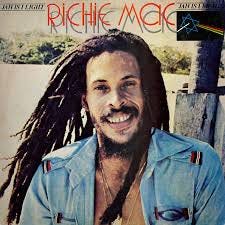
I was running down Hope Road in Central Kingston, trying to keep stride with my new found Jamaican running buddy, Richie McDonald. His dreadlocks were floating in the air as we ran. Some people were beeping horns. Richie said the horn blowers were egging us on. People liked to see runners in Kingston. It was a rare sight in the tropical heat. Richie was stretching it out. I had a side ache and was trying to keep up. He told me to keep breathing with rhythm. The aches would pass. He was right.
I’d met Richie “Mac” over lunch, the previous day in the garden of a small boarding house where I rented a room for a week, in downtown Kingston, just off Hope Road. He’d stopped by to see someone who was living there and was in the garden at a table. I joined him and a conversation ensued.
The boarding house was run by a delightful elderly woman, Ms. Victoria, who had a charismatic smile and a gift for making you feel like you really belonged there. A local guy I met on the bus from the airport had given me her address. He knew Ms. Victoria. I didn’t have any hotel reservations. Her rooming house was in a central location just off Hope Road, less than a mile from the Ranny Williams Entertainment Center, where the 1980 Reggae Sunsplash Concerts were being held. It was a four night event.
Richie and I clicked right from the first conversation. We talked about music and running. He was intrigued that I played in a Yankee reggae band back in California. He was trying to sort out what that might sound like.
The second day in Ms. Victoria’s garden, Ritchie “Mac” returned and asked me if I wanted to go for run in Kingston. He might have been testing my authenticity about being a runner. He looked in excellent shape. I had one pair of shoes with me on that trip. A pair of old running shoes. I’d traveled light to Jamaica, with everything in a small shoulder bag. I had one pair of cut offs, one pair of long pants, and two shirts. Running shoes. No jacket. That was it. There were no cell phones in those days, or devices to carry.
When I’d go out at night to the Reggae Sunsplash concerts at Ranny Williams Center, I carried only the concert ticket in my pocket. No wallet, no keys, no money. No ID. The streets of Kingston, a city with a population of more than half a million, were unpredictable, especially at night when the concerts were over. The concerts generally ran until 3am, or even later at times. I’d cautiously walk fast, alone, in the late night hours to get back to Ms. Victoria’s rooming house. She didn’t give you a key. You had to knock on the door, even at 3am. She was always gracious in welcoming me in at the odd hours. The front door of the house had triple locks. The windows had steel bars. I felt safe there.
This was the only year that the Reggae Sunsplash Concerts were held in Kingston. The previous years and following years (1978-1992) the Jamaican-based concerts were always staged in Montego Bay, a smaller city, more structured to tourism. Kingston was much larger, more intense, urban environment.
That day when Richie and I set out for a run, he showed me parts of Kingston that I would have never seen, given the degree of caution that you had to weigh in venturing the back streets. The neighborhoods were economically poor. Dilapidated. But running with Ritchie gave me a license to be there, at least in my mind.
In one back street neighborhood, the Jamaican Defense Force, the JDF, had about 10 men up against the walls of a tenement yard. The JDF had a military truck and a lot of guns drawn. Maybe 15 soldiers. A small crowd of local residents had gathered. I have no idea what was going down there. Richie and I kept running and nobody bothered us.
Everything was dramatically new to me. I was coming from a rural, California lumber town community. I’d never been to the Caribbean before. Despite the poverty, people appeared strong and intent. Even ten year old kids on the street. It was humbling.
During that run, Ritchie and I wound through various neighborhoods in the center of Kingston. I knew that down toward the waterfront the neighborhoods got even harder, near Trench Town. I’d been reading about Jamaica the previous few months, preparing myself to be there. But really, nothing can prepare you for what you physically encounter.
Richie and I ran about five miles through Kingston that day. At one point we passed a broken down 1950’s vintage passenger bus on Hope Road. A man sat on the street curb cleaning engine parts. He had the entire engine out of the bus on the sidewalk in pieces. Block, crank shaft, pistons, connecting rods, all laid out on the street. A woman sat in front of a tent under a tree on a grassy knoll near the bus. She was stirring a pot of something, cooking over an open fire. My sense was that the bus engine had failed right there, and the driver and his wife were camping in the middle of Kingston on Hope Road, trying to fix the bus. It may have been their only means of income.
When Ritchie and I broke out of the neighborhoods, we were on the upper end of Hope Road. It was all down hill from there. After I got over my side ache, we were matching stride for stride, in what felt like a music jam. You’re not thinking about anything, just tuning into the oneness, the rhythmic breathing, the fluid motion, the even strides. And you are synched with the runner next to you. Big smiles. A real connection beneath it all. Time had vanished as had any sense of human difference.
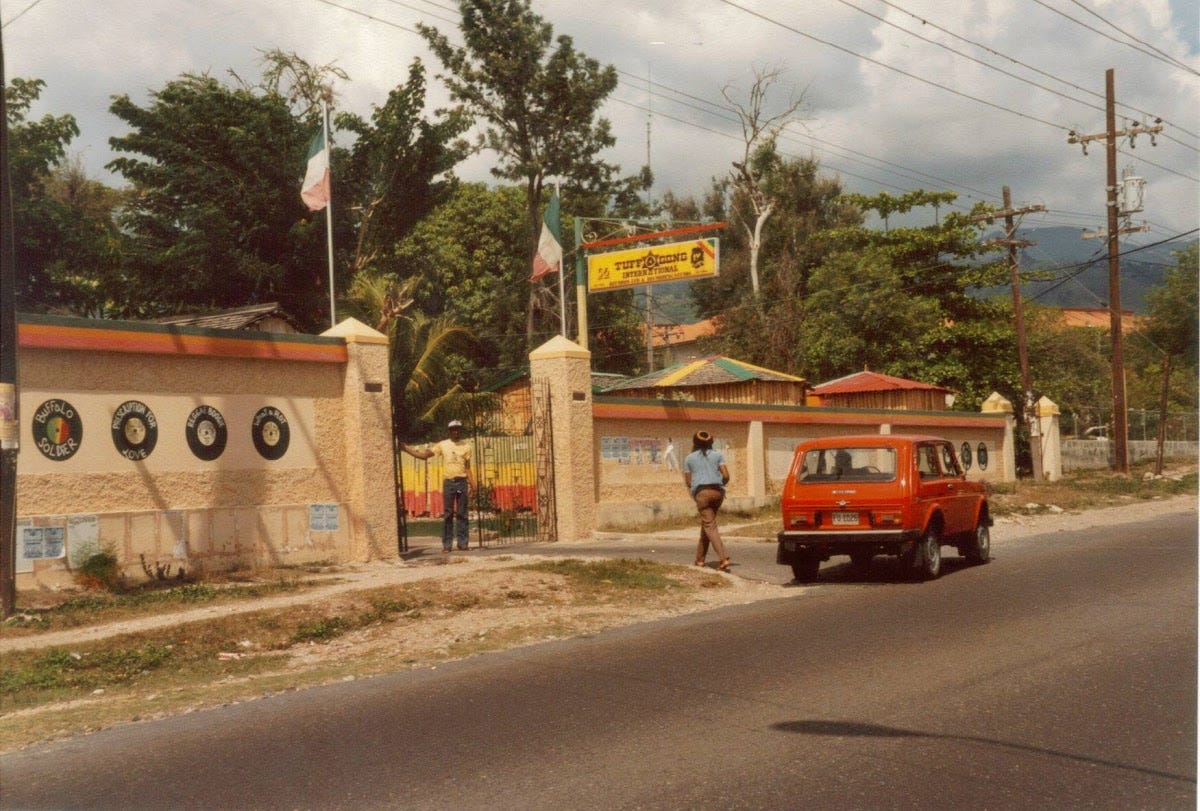
Ritchie Mac invited me to Bob Marley’s Tuff Gong Studios the next day to hear Richie’s Broad Road recording in the mixing room. Marley was not on the island at that time. He and the Wailers had launched a major European tour in May and would continue touring steadily into September in the States. It would be Bob Marley’s final tour.
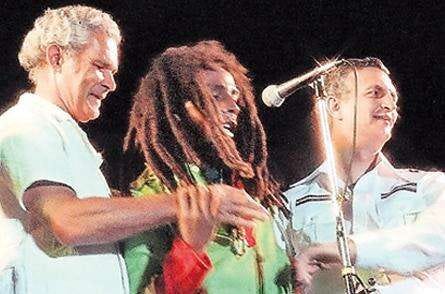
When I met Richie at Tuff Gong the next day, I was surprised at the relaxed, open atmosphere around the grounds, given all the political violence that had been rocking the island. Marley had actually been shot and wounded four years before trying to promote a peace concert to quell political violence. During the 1980 Sunsplash concerts, the political tensions were still a tinder box between the Jamaican Labor Party’s, Edward Seaga, a Harvard educated capitalist, who was trying to oust Prime Minister Michael Manley, a devout socialist from the People’s National Party. Around 800 people had died in street violence.
I hung with Ritchie in the Tuff Gong Studios for a few hours that day. I listened to his recording, Broad Street, that had been released several months before. He was working some new material. He played some of that, then handed me an acoustic guitar and we started to play a bit. He was interested, maybe amused, at my sense of reggae. I couldn’t hide 20 years of rock’n roll grooming.
I wandered outside Tuff Gong as Ritchie was doing some studio work and needed to focus with other people. Outside, a couple older Rastafarians approached me. They eyed me, curious why I was there. I mentioned Ritchie and that I was a Bob Marley fan, and a reggae fan.
One of the Rastas decided to take it to another level. He handed me a lighted spliff. A real bomber. I had to take it. To not take it would have alienated me on the spot. I took a big draw. My head immediately felt like a hot air balloon, lifting off. I was dizzy. A bit disoriented. It was a powerful toke. The Rastas watched me.
One asked, in his native Jamaican style, “Do you believe in Haile Selassie, the Living God? Lion of Judah?” He waited for my response, never blinking. He wanted to hear truth.
It’s one of those questions that sets you up for failure. If I say, yes, they know I’m lying because they can see who I am. If I say no, then I’m a confirmed non-believer.
My answer was “No.” They acknowledged me with a nod, then walked away.
I was ready to pass out from the weed. The intense tropical heat. And the sensory overload of the moment. I stepped over against a wall and lowered myself to the ground. I wouldn’t have far to fall. At that point I felt very alone. Very far from home. It was more than three thousand miles to Humboldt County. I was on the edge of consciousness, nothing in my pockets, about to pass out at Tuff Gong.
The SunSplash Concerts
That night I went to another of the four Sunsplash concerts. The events had been incredible. To be in downtown Kingston, late into the early morning hours, hearing dozens of the great reggae bands of the era was mesmerizing. Burning Spear, Peter Tosh, The Mighty Diamonds, Black Uhuru, Dennis Brown, Sly & Robbie, etc. But to me the high point would be Joseph Hill & Culture. They captured the most intensity of the four nights. They completely raised the crowd. Their set was filled with revelry, chants, and deep truths about Caribbean culture, life, and Rastafarian ways. Joseph Hill sang his revelations. The crowd embraced it. It was a powerful performance.
Bands at the 1980 SunSplash Concerts in Kingston, Jamaica
Bob Andy, Black Uhuru, Ken Boothe, Dennis Brown, Burning Spear, Casual T, Culture, Carlene Davis, Beres Hammond, Bongo Herman, I-Kong, Kiddus--I, Barrington Levy, RAas Michael & The Sons Of Negus, Michigan & Smiley, Mighty Diamonds, Sugar Minott, Native, Olatum, Oku Ounura, Lloyd Parks & WTP Band, Prince Edwards, Revolutionaries, Jimmy Rilley, Leroy Sibbles, The Tamlins, Peter Tosh, Delroy Wilson, Word Sound & Power, Zap Pow.
I arrived each evening at the SunSplash concerts at 6pm as the tickets advertised. The music never started before about 10pm, at the earliest. One night I sat there for six hours. No live music. No announcements from the producers. Just recorded music playing over the PA system. Any notion of time just seemed to vanish. Finally at midnight, I walked onto the stage. Nobody stopped me. I went behind the stage and found every person in a state of slumber or just sitting motionless.
I asked a guy, “Is the music going to happen?”
“Yah man, soon come,” he said. That was good enough for me. I went back to my seat and waited. The first band kicked off about 12:30am. The concert ran until sunrise that night.
I think it was the third concert night that there was a total power failure at Ranny Williams Center. The place just suddenly went absolutely dark. The music quit. I immediately felt dozens of hands pick pocketing me. The Kingston youth. But I had nothing in my pockets. A helicopter appeared overhead and hovered with a huge light beacon shining down on the concert area, casting an artificial hallow of light. Scores of Jamaican police with sawed off shot guns and German Shepards on chains ringed the concert area. The event remained orderly.
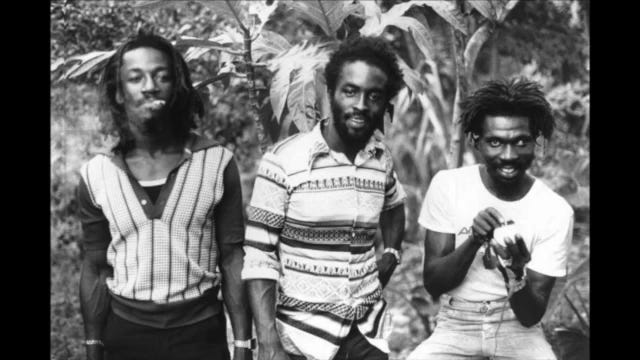
Trip To Denham Town
I had one phone number and an address in my pocket when I landed in Jamaica. The phone number was of a hometown acquaintance who worked at the US Embassy in Kingston. I didn’t call him until the day I was leaving Kingston for Montego Bay. I guess I didn’t want to find someone familiar in such an official capacity down there. He lived in upper Kingston, an affluent area.
The address, on the other hand, was from George “Fully” Fullwood, bass player and founder of the Soul Syndicate reggae band from Kingston. He lived down in Denham Town, adjacent to Trench Town. He’d stayed at our place one night back in Humboldt County after the Soul Syndicate, with vocalist Earl Zero, played a concert at Humboldt State University.
Our reggae-style band, based in Trinidad, California, had opened the show for the Soul Syndicate. George and a couple other players from their band stayed at our place in Trinidad, out in the redwood forest. In appreciation, George had given me his home address and said, “If you come to Kingston, look me up.” I had that address in my pocket. I don’t think George ever thought I’d really show up in Denham Town.
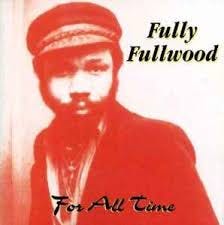
After the SunSplash Concerts concluded, on my last day in Kingston, before taking the train across Jamaica to Montego Bay, I decided to brave it out and go look up George Fullwood. I woke up a taxi driver on Hope Road who was asleep in his cab. I showed him the address in Denham Town. He looked at me. Looked at the address. Looked back at me again, and said, “Man, you sure you want to go there?” The emphasis was on YOU.
“Yup, let’s go,” I replied, and jumped into the backseat of his dilapidated cab. He’d been smoking weed.
We drove down into the deeper center of the lower districts of Kingston. It seemed that each block got more wild. Car bodies abandoned, several had been torched. Streets were lined with tall brick and masonry type walls, often topped with shards of broken glass and barbed wire. Others were defined by corrugated sheet metal enclosures. Political violence and brutal economics had boiled over in these districts. The farther in we went it seemed like we were entering a war zone. People clustered in groups. In alleyways. On side streets. I was getting nervous, riding in the back seat. I hoped that Fully would be home.
The driver finally pulled up to a walled compound. A solid barrier door displayed the address number. This was it. I told the cab driver I’d pay him when somebody answered the door. I didn’t want to be dropped off here and have to walk out.
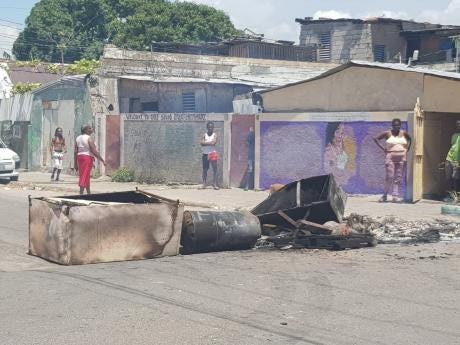
I stepped out of the cab and rang the bell. An older man slowly opened the heavy reinforced door. “Hi, is George home?” I asked. It seemed like a dumb question the minute I asked it. Like it was my hometown neighborhood.
“What are you doing here son?” the older man asked me. Visibly surprised at my presence at his door. And probably a bit concerned about my well being, or state of mind to have shown up in the neighborhood.
“Come in. Come in,” he urged. I paid the taxi driver and entered the Fullwood compound.
George was not there. He was on another concert tour, off the island. His father had answered the gate bell. He invited me into their very modest home and offered me a seat in a stuffed chair. A young girl about 10 years old stood in the background, kind of shy, but smiling. She was Mr. Fullwood’s youngest daughter. She wore a nice dress. My impression was that I was an unusual guest. I glanced at the rotary dial phone on a table. It had a pad lock on the dial. The windows had steel bars.
Mr. Fullwood was a very nice man. He engaged me in small talk. I explained how I met his son, Fully, back in California, that we had played at the same concert. That he’d stayed at our place. Fully’s dad asked his daughter to make us some tea. We chatted for about an hour. He was trying to ease my anxiety.
The crazy part in my mind the whole time was that when George Fullwood had stayed at our place out in the rural Humboldt County, he was really nervous in the dark woods as we led him along a path with flash lights at 2am to a cabin in the forest where he was going to sleep. He was saying stuff like, “Are there any bears here? Mountain lions?” His eyes were searching the darkness. No worries we told him.
Now I was in Denham Town. His neighborhood. I was nervous. And it was broad daylight. It was just ironic how one person’s environment might be perceived versus another’s.
It was time to go. Mr. Fullwood told me to stay seated, that he would send his daughter out to find a cab. He told me that I shouldn’t go into the streets. I waited. She was back in about ten minutes with a cab. He ushered me through the gate and into the cab. As I pulled away, a group of young men across the street, were surprised, as they caught sight of me as I departed Denham Town.
About twelve years later I ran into Fully at a Seattle nightclub. He was just stepping onto the stage when I caught him. I was a sudden face out of the crowd. No warning. It was awkward. I reminded him that we played together and that I stopped by his home and met his dad. I think it was more confusing to him than anything. It had probably been a few hundred concerts ago for Fully. A few thousand faces. But he said, “Hey, how ya doing?” Then continued onto the stage for his show.
jhg - 1980
Richie “Mac” McDonald on YouTube - Broad Road, (C) 1979