
Remembering The Man From Laramie
Hitchhiking alone at night has certain suspense, an exposure to spontaneous interactions with unknown consequences along open highways. An encounter in Wyoming 50 years ago left a lasting impression.

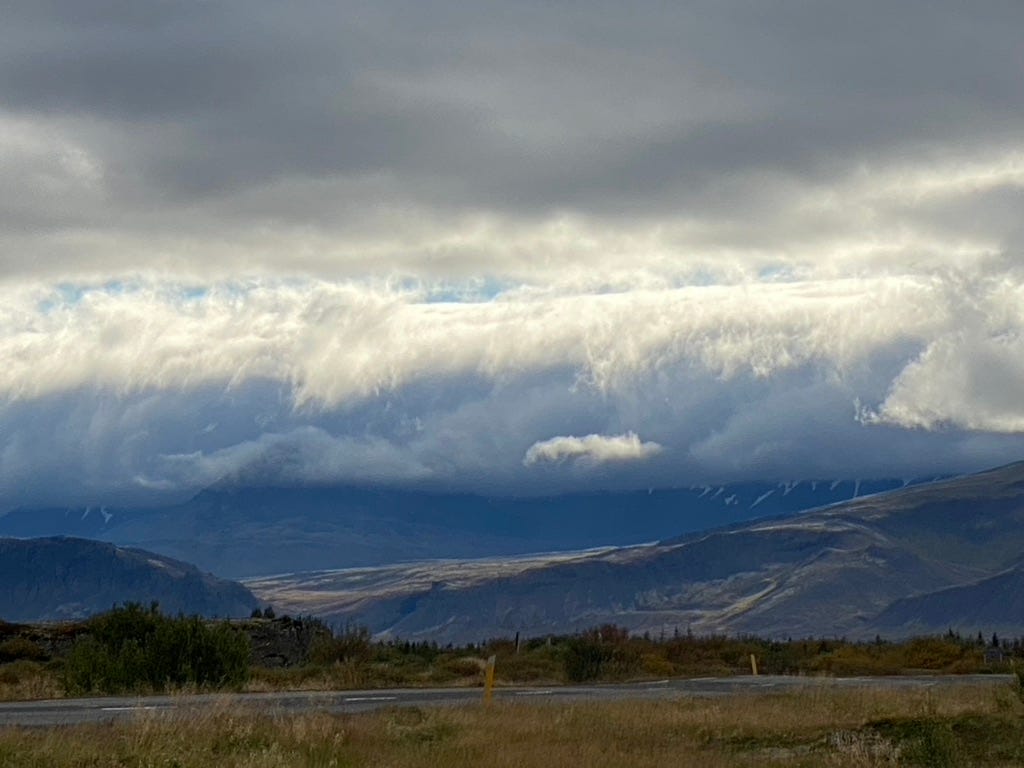
Eastern Wyoming - 1973
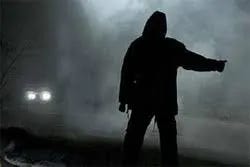
It’s midnight on I-80 in Eastern Wyoming. I’m hitchhiking in a winter snow fall. My leg is broken. I’m on crutches. My plaster cast is wrapped in a plastic garbage bag to keep it dry. I have a small pack, my jacket is too thin, and my jean cuffs are frozen solid. I drape my sleeping bag over my shoulders. It made me warm. But it made my silhouette appear much larger, more looming. Headlights go blazing by. Drivers swerve a bit away from me.
I can’t blame them. It was my choice to be out there that night. I broke my leg skiing in Park City a month before. While recovering, I decided to hitchhike to Washington DC. It seemed like a good idea to see the nation’s capital. Less crowded in the winter. I went to the museums - The National Gallery and the Smithsonian. Saw all the great monuments, toured the White House, the Capital Building. I could cover a lot of ground on my crutches. I was in good shape from skiing everyday.
It’s a 4,000 mile journey - hitchhiking from Park City, Utah to Washington DC and back. I’d hailed more than forty rides during the trip.
Scores of cars and trucks passed me by that night in Wyoming. One after the other. Who wouldn’t? In the dead of night, in winter weather, pick up a hitchhiker? On crutches? Must be out of his mind to be out there.
Most of the trip I hitchhiked in daylight. It was amazing how many people stopped in the daylight to pick me up. I think it was the crutches and broken leg that got them. Some had never picked up a hitchhiker before.
Like the woman in Chicago. She said she’d never picked up a hitchhiker before, until she saw me that day. She took me to lunch. She queried me about my life.
“What are young people thinking these days?” she’d asked. “Will you talk to me, please?” She seemed a little desperate. “I’ve lost communication with my daughter,” she admitted.
Her daughter was about my age and she’d left home, to travel, like so many of us in that era. The woman wanted to know what we were all thinking, where we were going? Was I worried about the future? What about marijuana and drugs? She was bewildered trying to understand our generation. How could she create a more connected relationship with her daughter, she asked.
She thought a young hitchhiker might provide some insight. A neutral sounding board. I talked with her honestly, like I would with a good friend. Though I had few answers, just an openness and ability to listen and reflect. I was out there on the open highways myself, looking for answers.
I don’t think I solved any of her questions. Maybe just having somebody to address the questions would be a rehearsal for the next time she saw her daughter. She seemed to enjoy the conversation, the easy interaction, the lack of tension that parent sibling relationships could generate. She drove me back out to the Interstate and dropped me off.
That was a day ago.
After a series of rides, I was on the freeway near Cheyenne, Wyoming after dark. A wet snow falling. It was about 370 miles to Park City, Utah so I decided to hitchhike into the night.
I didn’t like hitchhiking at night, but I preferred to keep moving. Odds of getting a ride at night diminished significantly. It was harder to tell who was picking you up. And drivers would be more wary. Night driving didn’t give people much time to think either. When they came upon a hitchhiker, you suddenly appeared in the lights, and they blew past you in a second.
The Man From Laramie
The stream of traffic that night in Wyoming kept rolling past me. It was hard to see. Everything was anonymous. To me, the cars were two glowing bulbs racing toward me through the wet falling snow then blasting past. You couldn’t see the drivers, just dark reflections of windshields. Some drivers tapped the brakes, perhaps just at just the notion of somebody on crutches standing in the snow on the highway at night.
They might have asked a fellow passenger, “Did you see that? Was that guy on crutches?” But they’d be well past me by then, red tail lights disappearing into the night. I was just an opaque silhouette to them. A dark shape, an arm extended with a thumb. Almost like a scarecrow.
That’s when the man from Laramie appeared.
His brake lights lit up. He pulled over. Backed up along the edge of the road so I wouldn’t have to crutch too far. I noticed Wyoming plates. A local.
He swung open his passenger car door, said “Get in.”
He was direct, he looked me in the eye.
“Where are you going son?” he asked. He was older.
“Park City, Utah,” I said. It was still a few hundred miles west.
“You shouldn’t be out here in the night,” he advised
I thanked him for stopping.
“You’ve got a broken leg and you’re hitchhiking alone at night?” His question was more of a statement, embedded with judgement. I could tell he didn’t approve of my lifestyle. But that hadn’t stopped him from offering me a ride.
He looked over at me and said, “It’s too far to Utah for tonight … I’ve got a son about your age,” he added, glancing at me and back at I-80, “I can’t imagine him being out on a highway at night in the winter alone.”
“How’d you break your leg?”
“Ski accident, “I said. “I went off a jump, bad landing.”
“Hmm.” He was thinking. “Do you have money?”
“No, not much really.”
He pulled off the freeway into Laramie, his hometown. “I’m buying you a hotel room,” he stated.
“Sir, you don’t have to, “I said. “I appreciate the ride.”
“No, I’m buying you a hotel room,” he was firm. “I wouldn’t want my son to be out on a freeway alone at night. That’s it.”
We pulled up in front of hotel in downtown Laramie. The man went to the desk, paid cash for a hotel room for one night for me. Then he drove away.
I lay there that night, so thankful, so comfortable. And here I am, 50 years later, still remembering what an enduring gesture The Man From Laramie showed me in life.
jhg - 1973