
Into The Bugaboos and Cariboos
The Canadian Rockies are majestic wonders, from Banff and Jasper in the summer, to skiing Lake Louise, Sunshine or Norquay in the winter. Then there are the Bugaboos and Cariboos ... a step beyond.

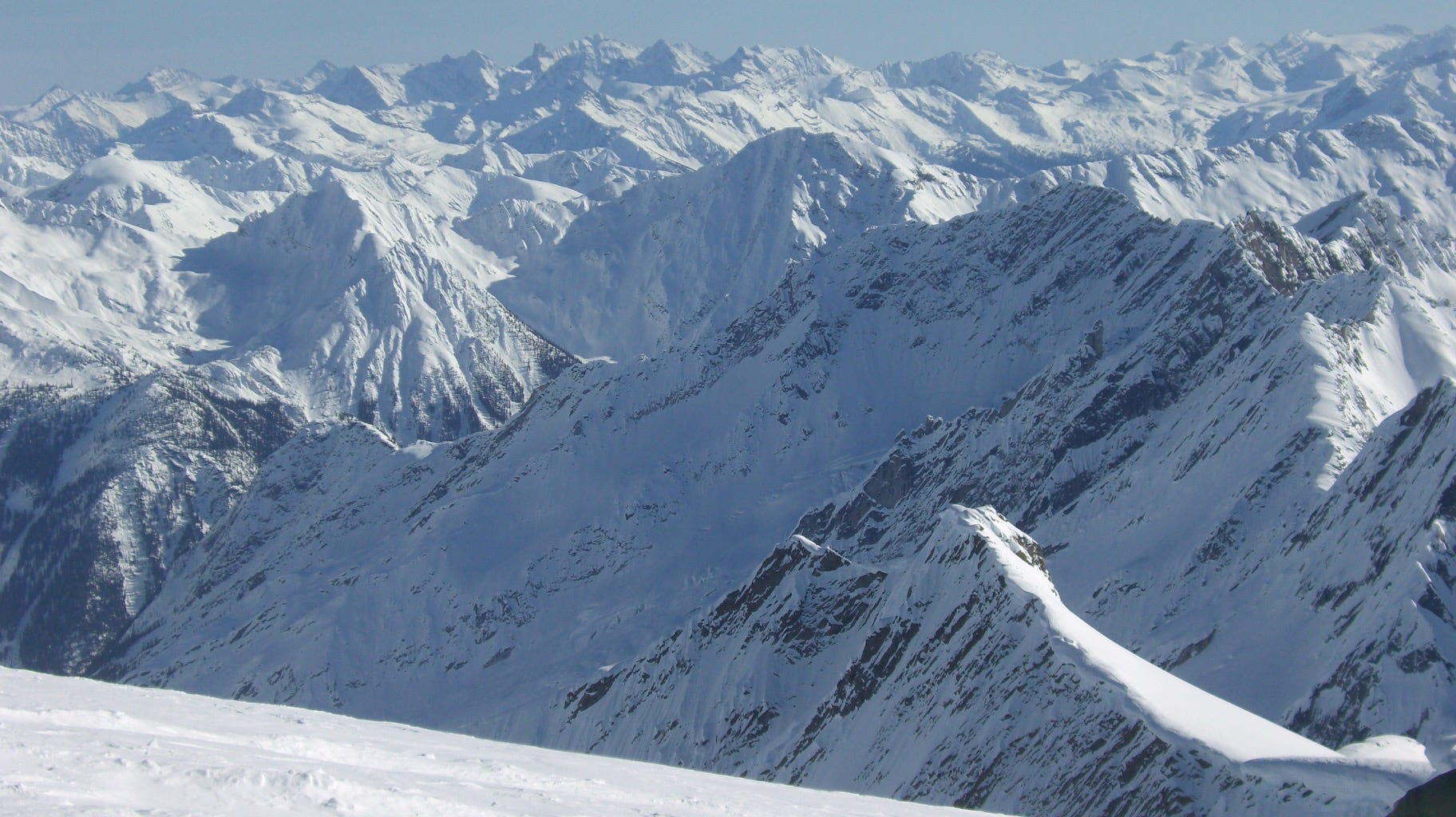
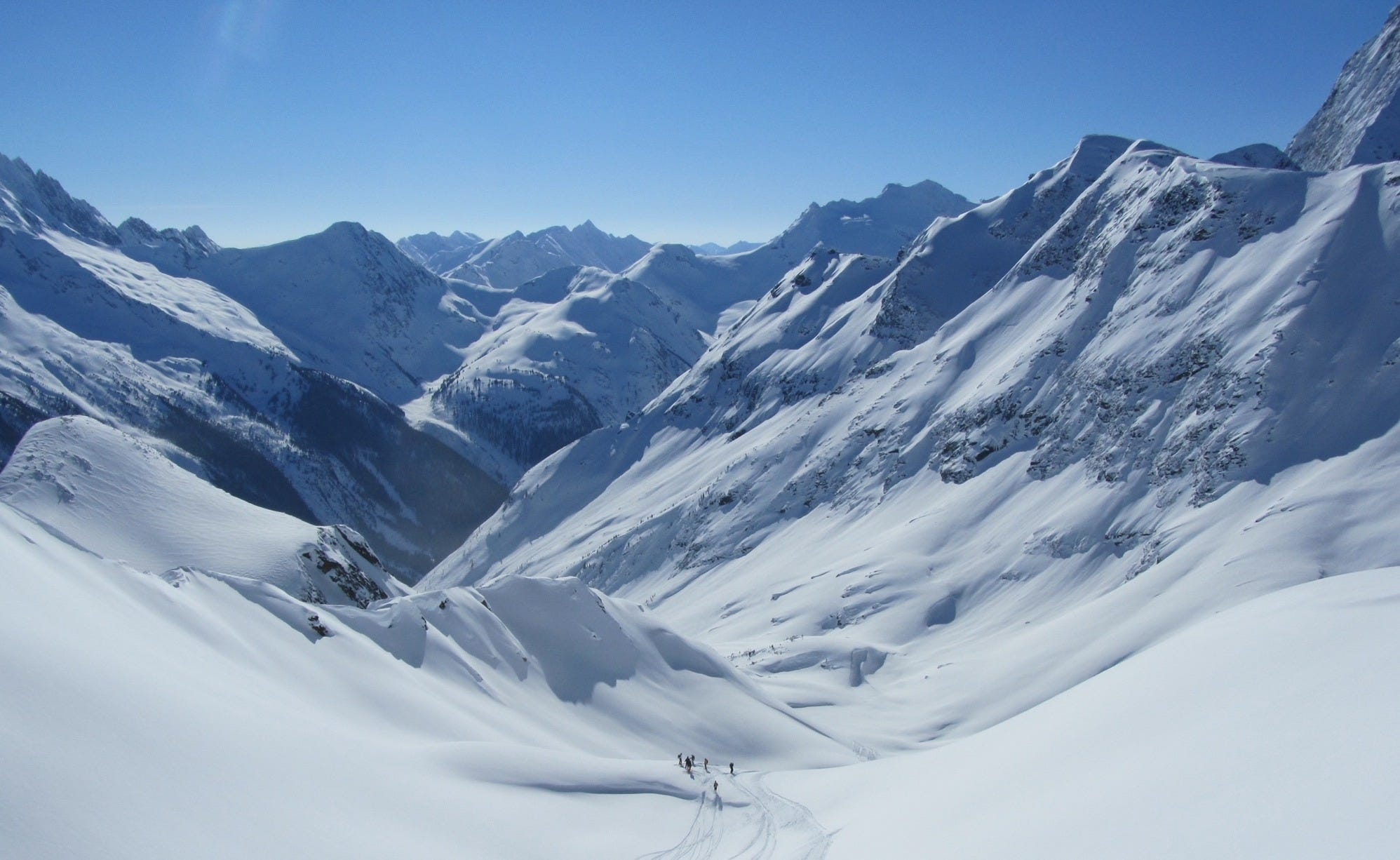
You get dropped off on precipitous mountain ridges where the air is very thin, hard to breath, or on glacial fields far above tree line. The thump of rotors break the silence. You snap into your skis. Helicopter blades create gale force winds that hurl ice pellets. Snow capped peaks jaggedly disperse as far as you can see, like the world may end out there, or not. The helicopter thunders off and leaves you in silence. You drop over the edge, the first descent, the hardest. You feel tight on the steep fall line.
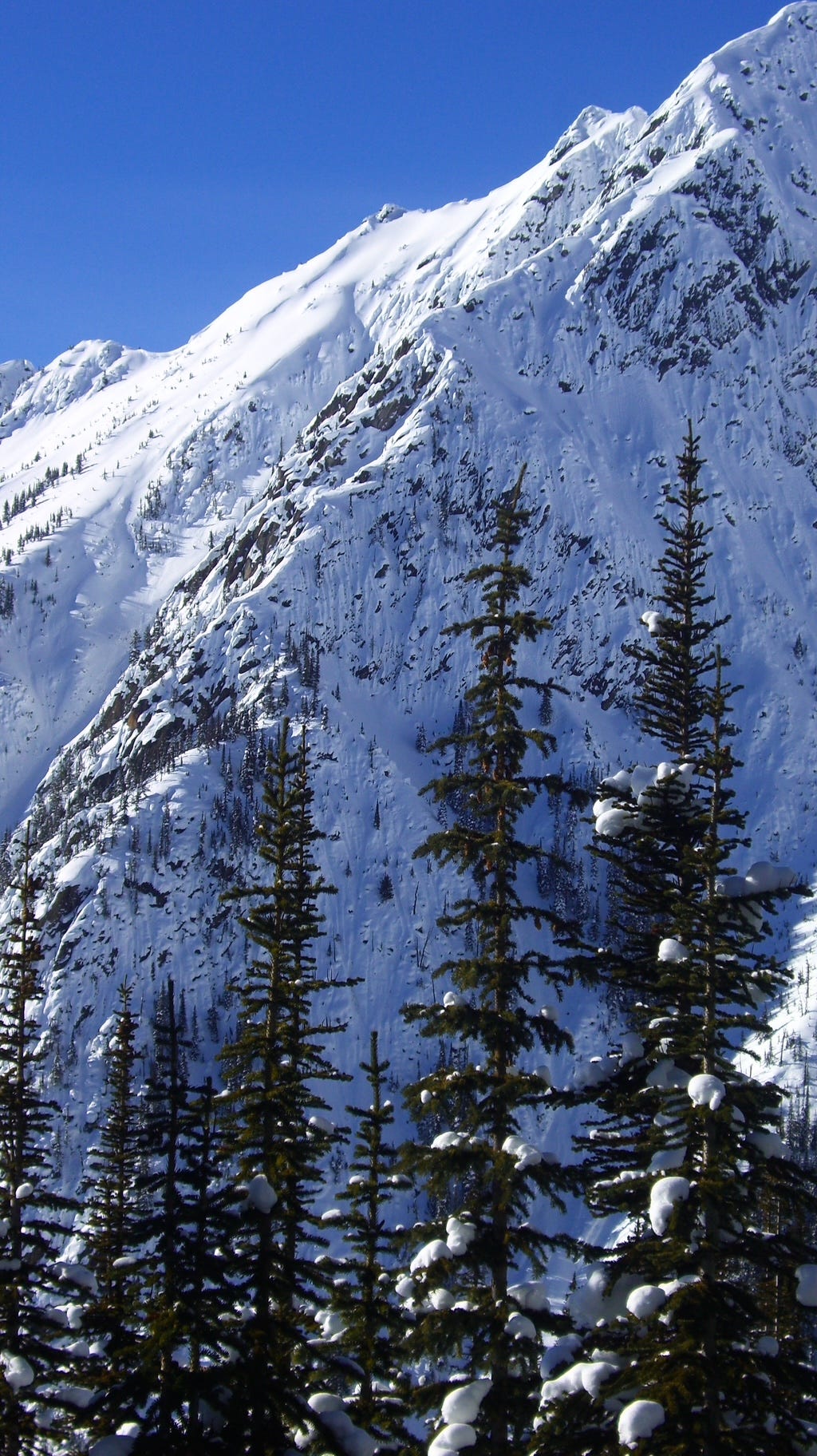
Sometimes you are dropped off in mountainside forests, with vertical inclines that defy gravity, defy avalanches despite a sixty to seventy degree pitch down through trees. You only drop into that realm because the guide in front of you just began his descent. You have to follow. You have no choice. Have to stay close, within the boundaries of his tracks and avoid the haunting snow wells that surround trees.
At times, it is almost like free falling, floating on all that untracked powder snow through the trees, across snow fields, into pristine cirques. You feel weightless. Suspended, but gliding downward. Carving. The snow can be so light that it appears as smoke as you leave a floating rooster tail of ice crystals behind you, spiraling against an absolute, deep blue sky.
It takes a lifetime to reach these places, these moments. Thousands of hours on the slopes. Thinking back to Humboldt County, almost 60 years ago, Horse Mountain rope tows in the Northern California Coast Range. Just getting started. The Ruby Creek run was the challenge in those days.
Then T-bars, chairlifts, gondolas, trams. Graduating to bigger mountains over the years. Volcanoes. Double black diamonds. Becoming a ski bum in the Wasatch deep powder in the 1970’s. Perfecting a line, always an elusive line, that you search for each time you get on a mountain. Sometimes it’s there. Sometimes it’s not.
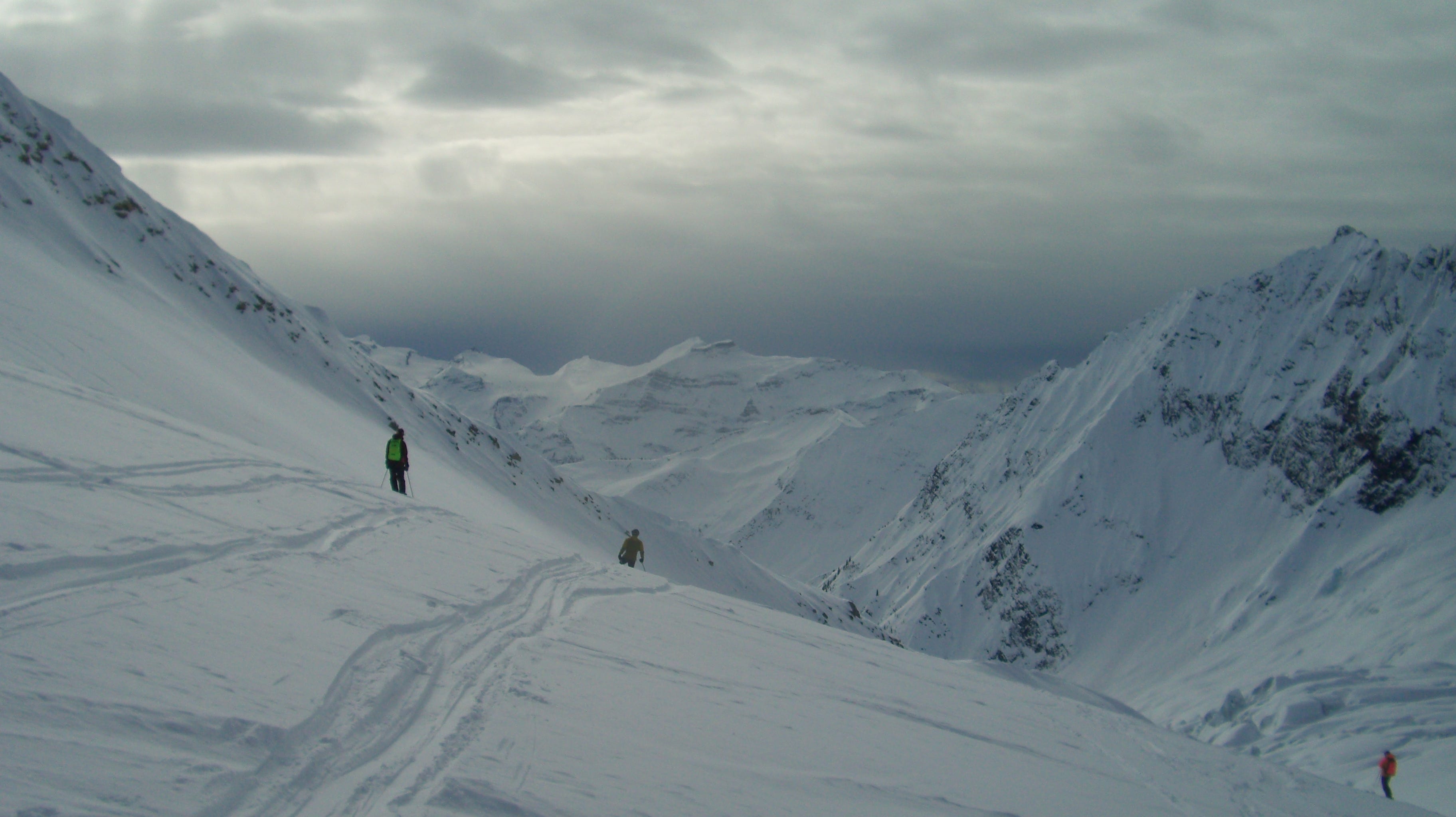
Three separate trips into the Canadian Bugaboo and Cariboo Mountains gave perspective. The first year in the Bugaboos was good, but the snow unstable. The air too warm, with some avalanches and enormous variations of snow quality. One six thousand foot vertical drop from a hard glacial peak and powder fields, led into wind crusted snow, then slush filled valleys below. Absolute crud. But weather only grounded us for one morning out of seven days. Some skiers you meet talk about other trips, unfortunate weather, the helicopters grounded for six of seven days.
The most ideal trip was into the Cariboo Mountains, for the second time. Six feet of snow fell before arriving. Blue sky and sub-zero temperatures settled in for the week. The temperature never got above zero. You could ski everywhere. The guides said it was one of the best ski weeks in recent memory. The slopes were stable. No weak or rotten layers underneath, ready to let go. Guides led us into steep canyons that they had not skied for five years. They were excited which made us excited.
Getting There
The helicopters are an experience in themselves. Three years, a hundred and fifty flights, nearly 400,000 vertical feet of wilderness skiing.
The helicopters bring great focus. Elbow to elbow with others on their own quest, from Europe, Asia, South America, North America, and Australia. They’ve worked their way up into these euphoric altitudes, unpredictable conditions, prepared to face whatever they meet, hoping for the best.
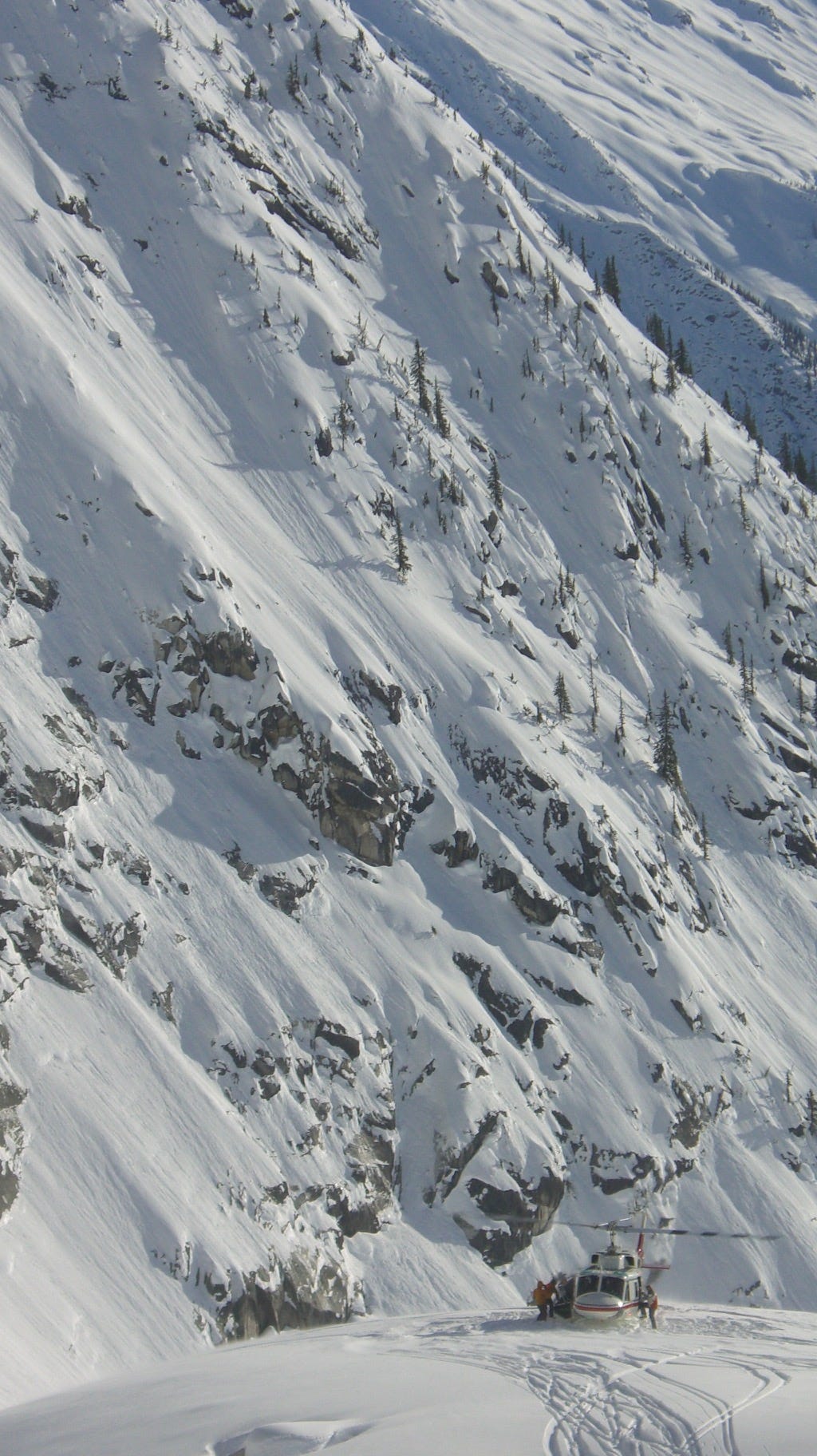
The pilots deliver you, sometimes to a flat landing area high up on a glacier, other times to a narrow ridge, where the pilot precariously balances the skids while a dozen skiers exit the craft and retrieve skis from a caged box bolted to the helicopter.
Our guide tells us the operations took years to perfect, starting with a tiny helicopter in a logging camp in 1965. Skis were stuffed inside the four seat cabin. Later they came up with the external ski cage idea. First flight, the pilot descended and skis floated up, into the blades, chopping the blades off. It was a hard landing. Next flight, they installed a lid on the ski cage.
Helicopter climbs alongside canyon walls are exhilarating. Pilots call this ‘hand railing,’ when they come in close to a rock wall and ascend up the steep snow slope toward a gaping saddle far above. At first you think the blades are only a couple meters from the walls. You are so close. The machine vibrates under the power of twin turbo engines. The moment you crest the saddle, terrain falls away abruptly and you start to glide down. The blade frequency sounds less tense on the decent than on the climb.


Guides
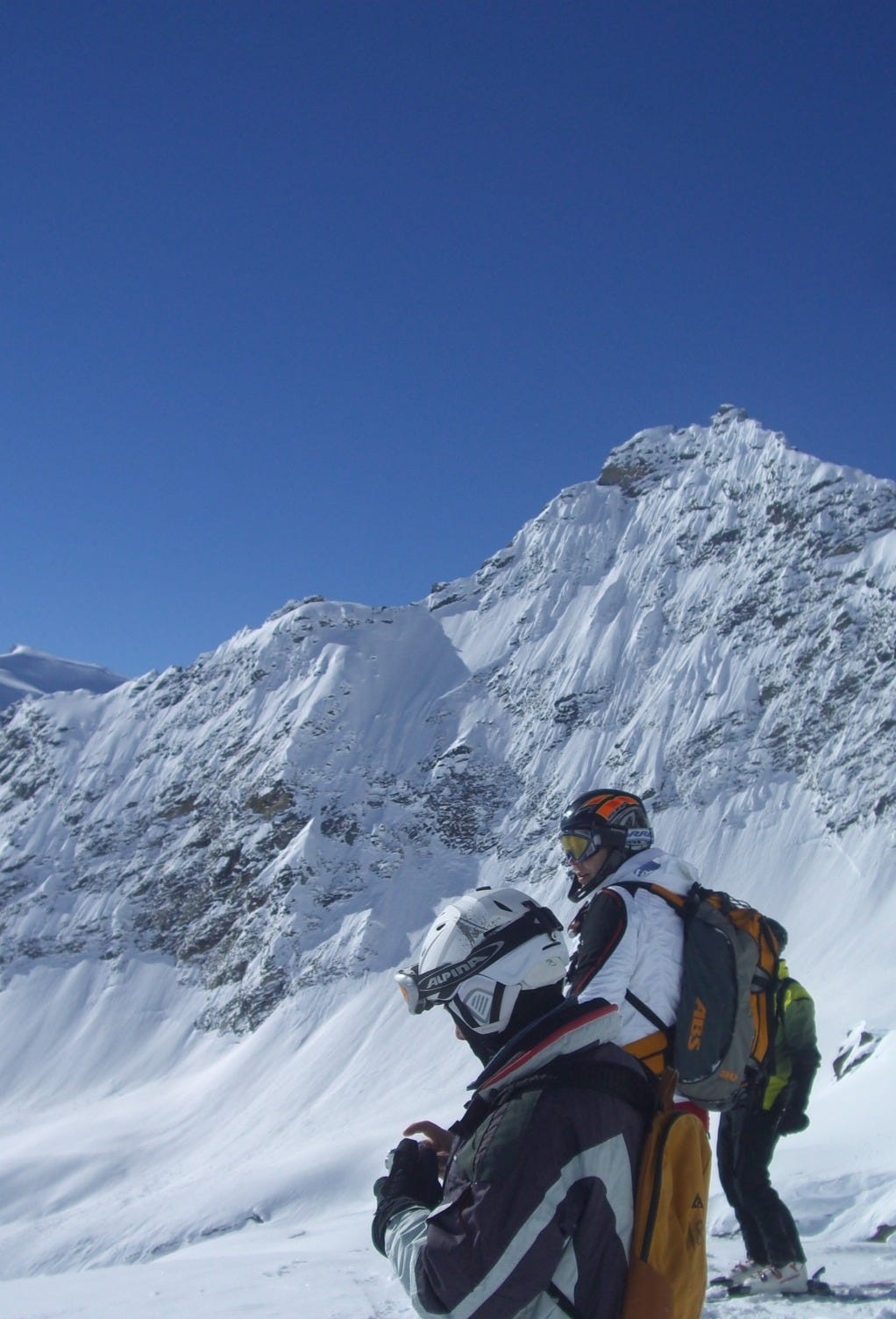
And there are those who guide you. A special breed, often 30 years experience, daily, on those mountains. Snow, both a science and an art to them. They run a morning conference call across the region with dozens of guides and area managers on the call, updating conditions. They know when to go, where to go.
Most importantly, they know when and where not to go. At sunrise they may drop charges from a helicopter on exposed areas when snow conditions are unstable.
They ski fast. Very fast. When they talk. You listen. And you never ski outside the track that they set when they tell you not to. It could save lives, or cost lives. Like in 1991, when a slab avalanche let loose and nine skiers from around the world perished in a moment. It was thought that one skier perhaps did not hear the guide’s directive to not drop into the massive untracked snow field.
“Maintain a high traverse!” … was likely the command.
The last skier on the traverse dropped in, fracturing a 250 foot wide slab.
The Journey
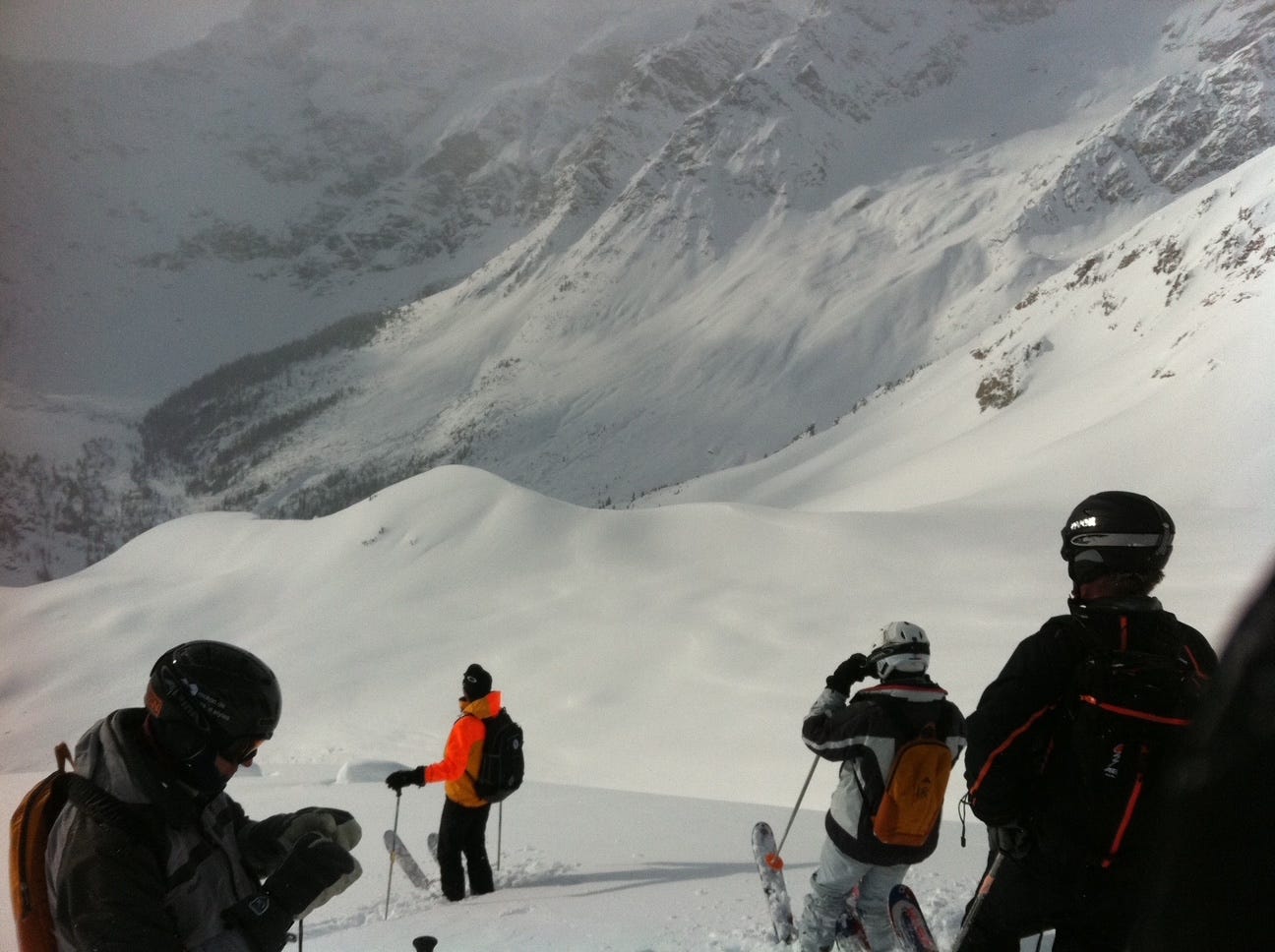
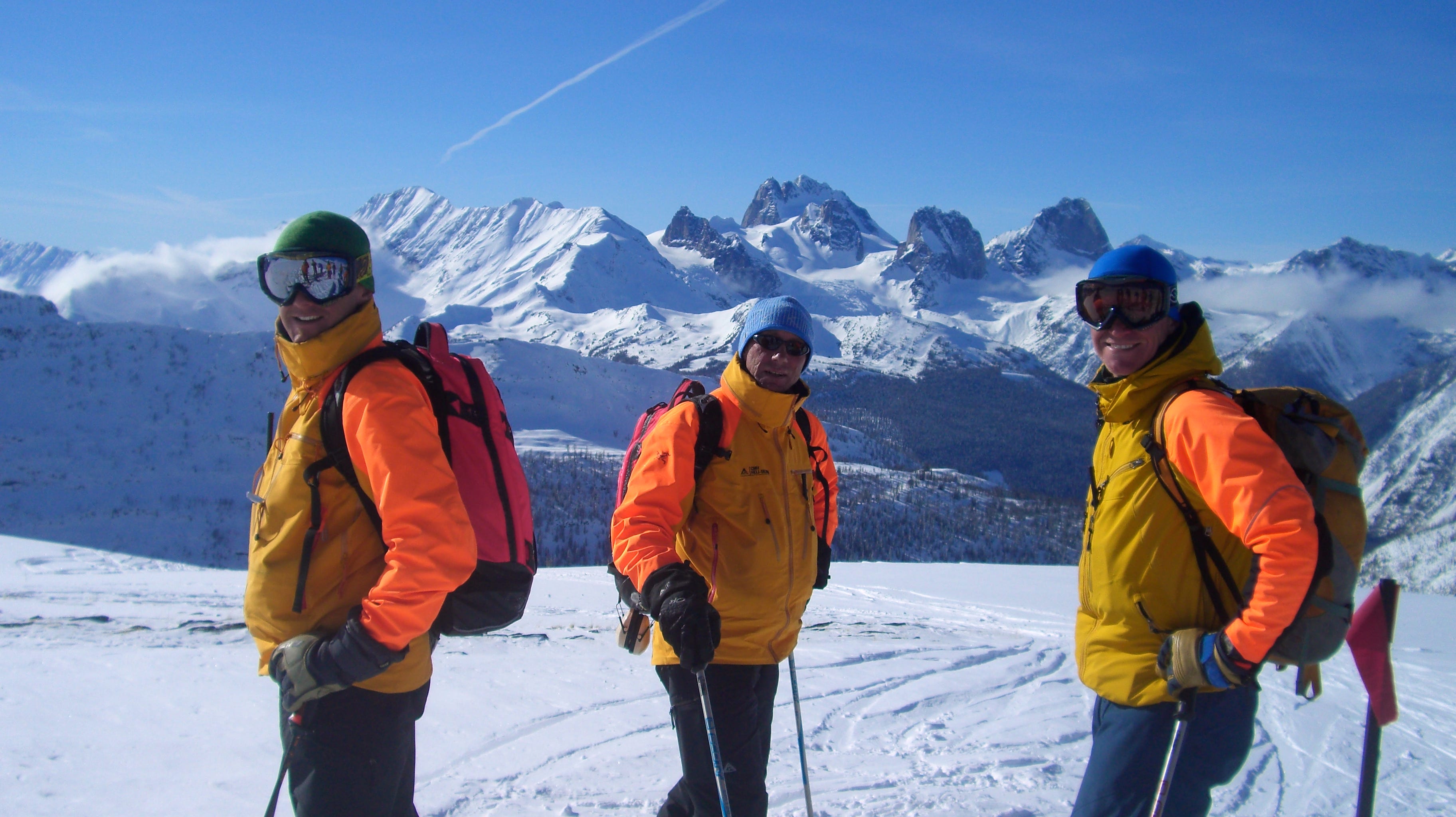
After those winter weeks in the Cariboos and Bugaboos, the last time in 2011, skiing has never felt quite the same. It was like some sort of Holy Grail moment in a life long ski journey. Reaching a stage of utopia with every run untracked, deep fresh snow, panoramas forever, just sheer exuberance, riding a thin metal edge down through the heavens, inspired by other skiers, pursuing their own high level dreams.
At this point in life, skiing is about clear days and wide open terrain to just let the skis run. Stay out of the bumps. Find deep snow. Mostly, above tree line as the views are expansive with fewer hazards. Panoramic chairlift rides are part of the enjoyment.
Now, to just maintain that lifelong ski journey … as long as possible!
jhg - 2011
PS - Inside the helicopter…guide on the left, pilot on the right - jhg