

Gracious, As They Were
There are moments in the journey when just reaching out to a stranger, maybe even a world celebrity, can cast an enduring impression, a graciousness, that you will be able to recall forever.

Willy McCovey
I’m living in San Francisco up on Twin Peaks, on Corbett Street in 1970. I have a studio apartment looking east, toward Oakland. I’m attending college in San Francisco. Quite often, I see Willy McCovey, the great San Francisco Giant baseball player, coming and going, from his apartment across the street. His colorful MVP cars are lined up in his parking spaces below.
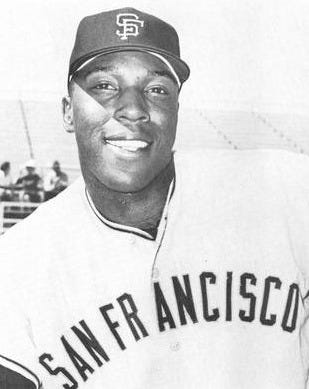
I’m a college student, in a tiny apartment. Studying the world. I’d known who Willy McCovey was since I was 10 years old collecting baseball cards with my best friend in Humboldt County. Once my friend’s dad flew us in his private plane from Humboldt County to Candlestick Park in San Francisco to watch the Giants play the Cincinnati Reds in a double header. It would be a day I would never forget - my first airplane ride and professional baseball game
Now, years later, I was up on Twin Peaks in that little apartment. And Willy McCovey lived across the street. I had a girlfriend at that time in the northland up in Humboldt County. I mentioned to her that Willy McCovey was my neighbor.
“He lives right across the street,” I said. I probably made it seem we were neighbors, like in Humboldt County, where people knew each other. It wasn’t like that. But she asked me if I could get his autograph for her little brother. Willy McCovey was his hero.
“It would mean the world to him,” she said.
He’s an eight year old kid in Fortuna, a small town in Humboldt, maybe 4,000 people live there. It was likely that nobody in that town had Willy McCovey’s autograph.
I was infatuated with that girl in the northland. I volunteered and said, “Yes! I’ll get Willy’s autograph for your little brother!”
I walk across Corbett Street and went up the stairs to McCovey’s apartment.
I’ve see him come and go from his apartment a few times while at my front window. I knew where to go. It all seemed normal.
His apartment number is the same number as mine. That would be a talking point.
I knock on the door.
His house keeper answers. I tell her my story, that I live across the street and would like Willy’s autograph for a young kid in Fortuna. Willy is his hero.
Skeptically, she looks at me. My long hair, blue jeans. Looking for an autograph. At Willy’s private home, right at his doorstep. I think about that moment today and it seems invasive, not the right thing to do at all. But back in 1972, it seemed okay. Maybe it was just my frame of mind.
Nonetheless, the maid disappears silently, leaving the door slightly ajar.
Then, Willy McCovey is at the door. Greeting me. With a big, genuine smile, as if I’m an expected guest. He invites me into his home. It’s a sprawling double condo with the walls knocked out into a grand, spacious room. Floor to ceiling windows open a panorama view of downtown San Francisco, San Francisco Bay, the Bay Bridge, and over to the Oakland Hills, to the east.
Now I’m feeling self conscious as I realize where I am. I follow Willy into his office. He invites me to sit in a leather chair across from him at a large desk. Trophy’s, posters, photographs, and memorabilia adorn the walls. There are glass cases. The lair of a hero, a super star.
I’m a student, looking for an autograph.
I hand him a blank piece of paper to sign, like I was prepared. I mentioned our apartment numbers were the same. He chuckles.
He was gracious and inquisitive. And he seemed sincere. He asked me a few questions about school, what I’m doing? Where am I from? He takes a black and white glossy photo of himself holding a bat from his desk. The photo shows him in his San Francisco Giants uniform. He personally signs it to my girlfriend’s little brother and hands it to me.
“How’s this?” he suggests, as if I’d prefer the piece of paper I brought.
I thank him sincerely. We exchange a brief conversation. He escorts me to the door. Shakes my hand and bids me well.
I don’t know what I expected would really happen when I knocked on Willy McCovey’s door, but I walk away stunned. His unassuming acceptance of a stranger in his home, his genuine interest in someone who just knocked on his door left an indelible impression to this day.
Tabu Ley Rochereau
I’m in a Seattle jazz club waiting for a concert to kick off. It’s around 1994. It would be my second night at the club to hear Tabu Ley Rochereau and his soukous band. He is a Congolese singer, songwriter from Zaire, Africa. I’d been listening to Tabu Ley’s Central Congo rhumba recordings for more than ten years. I had a dozen of his albums.
The soukous style guitar players that weaved their silken sounds around his high flowing voice had permeated my musical sense to the point that I was replaying those sounds in my mind. Just about everyday. I’d also began to merge the soukous sounds with my rock and reggae background, creating music in asymmetrical time signatures. I couldn’t consciously write those signatures, they just bubbled up from all the hours and years of listening to the African rhumba and soukous sounds.
Tabu Ley had composed more than 2000 songs and produced over one hundred albums in his career. He’d also introduced the great soukous singers, M’bilia Bel and Faya Tess to African audiences, with renowned success. He was a cultural legend in Africa. He was huge in Europe. Now here he was, in a small understated nightclub in Seattle. He could fill concert halls in Central Africa. He was close to sixty years old.
At the previous night’s concert which my wife and I attended, he invited people back for the following evening because he would be celebrating his birthday.
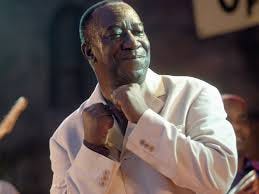
The next night I came alone and took in another unforgettable evening of Tabu Ley’s soaring and energetic rhumba style. It was riveting. The club was packed. Word was getting out that a legend was in town.
After the first set, after Tabu Ley had exited the stage, I walked up to the band’s lead guitarist who lingered with his instrument, to present a birthday card to be passed on to Tabu Ley. I said Tabu Ley had been a musical inspiration in my life for a decade. Soukous music had influenced my musical ideas and lifted my spirit countless times.
“Please pass along my best wishes on Tabu Ley’s birthday,’ I said, handing him the card.
“You should present that card yourself,” the guitarist said.
I hesitated. I didn’t mean to interfere with Tabu Ley’s life. Get in front of him. This was 23 years after I’d knocked on Willy McCovey’s door. It was a different time. He didn’t live across the street.
“Nonsense,” the guitarist said. “It’s perfectly normal. Follow me.”
He led me backstage through the corridors, to a private dressing room. He knocks on the door. The door opens. Tabu Ley is standing there in his African garb, with his young daughter by his side. She’s also, in a traditional African dress. She beams a smile to me. They are all alone in that large room. There’s no furniture.
I express my gratitude for his musical influence and hand the card to Tabu Ley.
He scans the card, then turns his gaze on me. He accepts the gift with a gracious smile, clasping both my hands, in his hands, staring into my eyes, thanking me from his heart. That moment for me would be suspended in time forever.
Four years after I met Tabu Ley in the Seattle nightclub, he returned to Kinshasa, the capital of the Democratic Republic of the Congo, after a long exile. The controversial reign of Mobutu Sese Seko had ended after 26 years. The new president, Laurent Kabila, recruited Tabu Ley Rochereau into the new government due to his popular cultural legacy among the nation’s people - first as a cabinet minister, and later as Vice-Governor of Kinshasa - a city of 17 million - and then, Provincial Minster of Culture.
jhg - 1970 & 1993
Remembering:
Willy McCovey - 1938-2018
Tabu Ley Rochereau - 1940-2013
For information about my books, please see: https://moonstonepublishing.com/