A Russian Rock Opera With California Origins
In 1806, the Russian and Spanish Empires shared a common frontier in Northern California, sensationally linked by a cross-cultural romance that inspired a rock opera 175 years later.

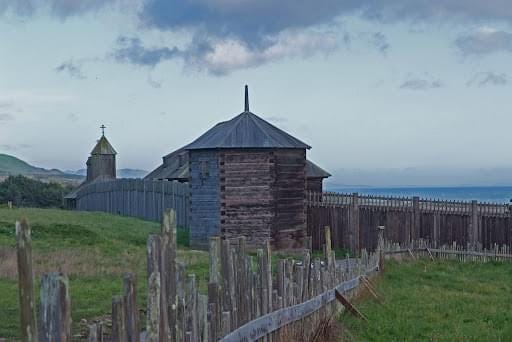
My first glimpse of a Russian fort on California’s US Highway 1, more than 40 years ago, stirred my imagination as I whizzed past on my bicycle. I was on a road trip down the coast. Fort Ross was closed at the time for refurbishment but its gray, wooden stockade and towers struck a dramatic pose of a time long ago, perched on the bluffs looking out over the Pacific Ocean. That image stayed with me. I read a brief history about the site.
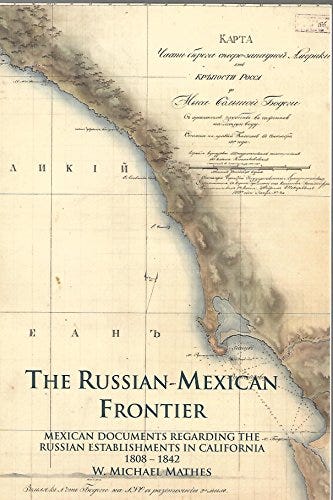
Some years later, I began reading the translated diaries of Russian fur traders and explorers on the California north coast. They’d traveled south from Alaska. The diaries mostly dated between 1803 and 1842. The intrigue deepened when I saw a Russian map of Humboldt Bay, near my hometown, drawn by a Russian cartographer in 1806, some fifty years before my ancestors arrived in the county. When the Russians first surveyed the bay, the region was inhabited by the indigenous Wiyot people who had been there for centuries. The map was depicted in Cyrillics. The Russians named the bay - Zaliv Inditzov - The Bay of Indians.
Of all the Russian stories in that period along the coast, the one that stood out most dramatically to me, was the epic saga of Nikolai Petrovich Rezonov and María de la Concepción Marcela Argüello. It was a fabled early 19th century love story, rife with intrigue, political conflict, and divisive religious beliefs woven into the narrative. Some called it a romance. Others said it was an opportunistic affair. Two hundred and eighteen years later, the story remains compelling.
It began on the morning of March 27, 1806, when Concepción Argüello stood on the shores of San Francisco Bay, at the Presidio fortress, looking with wonder as the giant sails unfurled on two approaching ships - the Juno and Avos. Both flew Russian flags. She was just 15 years old. Her father, José Darío Argüello, was Commandant of the Presidio in San Francisco. A career military man and later, governor. Some historians say that her father, was not at the Presidio when the ships arrived, that he was in Monterey, the Spanish era capital of Alta California.
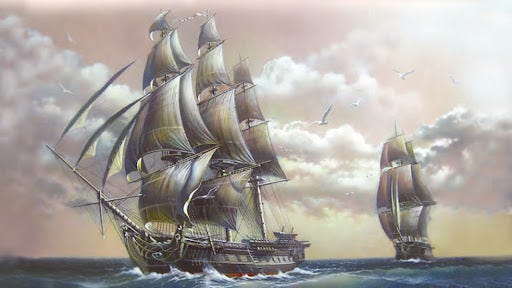
Rezonov was on a mission to secure food and grain supplies from the Spanish for the Russian establishments in Alaska. They were practically starving in the northern climates. He’d stood at the rails of the ship, looking toward the Presidio, pleasantly surprised that the Spanish did not have an armada of war ships at anchor in San Francisco Bay. There were no Spanish ships, just the guns at the Presidio Fort. When Rezonov dropped anchor, they received an invitation from Concepcion and her brother to come ashore.
Jose Argüello had been warned by the Spanish governor that Russian ships may approach the bay and not to receive them since they were allies with France, which was at odds with Spain at the time. Those troubles would erupt into a war within a two years and ignite the Mexican Revolution of 1810, and the establishment of the Mexican Empire. Mexico and Russia would share a common frontier in those brief years.
When Argüello heard Russian ships had entered the bay, he hurried back to the Presidio on horseback. But when he arrived, his daughter, Concepción, and son, were already entertaining the Russian Chamberlain and his entourage in Argüello’s Presidio home. The teenagers had invited the Russians ashore, eager to meet some Europeans at this distant colonial outpost of Spain.
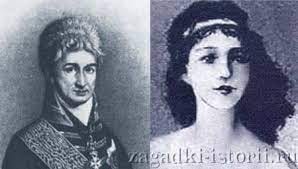
Concepción Argüello was intimately known to family and friends as ‘Concha’ or ‘Conchita’ in the small community of San Francisco. With an air of youthful elegance, she sat at the Presidio table and gaily entertained Count Rezonov and his officers on that fall day in 1806. Of course, she had no idea what her charming manner and powerful family connections had stirred in the Russian Chamberlain during that first encounter. But the longer Rezonov sat in her presence, the more he became infatuated with her.
He would spend six weeks at the Presidio as a guest of the Argüello family. During that time he secured a trade agreement with the Spanish for food and other materials to be delivered to the Russian America colonial capital of Sitka, Alaska. He also began to spend more time with Concha. She was fascinated to hear his stories of world travel and life in the Russian Imperial Court around the Tsar.
It began as an infatuation, an innocent love affair of the heart, two strangers from different cultures, getting to know each other, walking along the bay and seashore, countless conversations, picnics in the grasslands, sunsets at the Presidio grounds. In the Spanish tradition, they were always accompanied by other women. For six weeks the two grew closer together. Promises were made. Devotion was pledged.
Then the unthinkable happened.
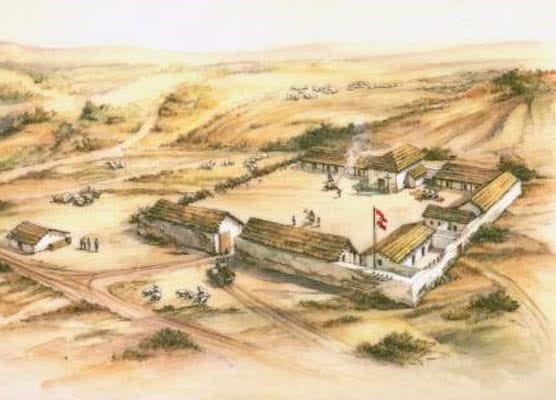
Nikolai asked to marry Concepción Argüello. Nikolai was a 42 year old widower and Concha a teenager. It caused a major stir in the small San Francisco community. Respectful of tradition, Rezonov asked her father’s permission. Jose Argüello could see the radiance in his daughter as she yearned for his approval. Argüello slowly gave in to his daughter’s wishes and blessed the union of Concha and Nikolai. But it was going to be complicated.
First, Commandant Argüello had to break the news to the Spanish governor that his daughter was now betrothed to the Russian count. The governor didn’t even want the Russians to land on Spanish territory. Now a marriage and an economic agreement? The Padres at Mission Dolores in San Francisco also tried to oppose the matrimony, but to no avail.
Then there was the matter of the greater church. The Argüello family were devout Catholics, the western offshoot of the divide when the Church of Rome split into East and West. Rezonov adhered to Russian Orthodox traditions, based on the Church of Rome’s more conservative eastern orthodoxy, linked to Byzantine culture.
Rezonov understood the gravity of this marriage and stated that he would travel back to St. Petersburg to ask the Patriarch of the Russian Orthodox Church for permission to marry across the divided faiths. The Padres wanted the Pope’s permission as well. All were in agreement that such a gesture would be noble and binding.
It would also be profoundly historic. The two lovers were riding a wave of East-West trajectories when they met. Their desires would challenge political relations in Europe and confront the chasm between the divided remnants of the Church of Rome. It was also marking the moment that Europe’s colonial out reach, to the west and the east, would meet head-on in San Francisco Bay, after three centuries of exploration and colonial development, much to the detriment of the world’s indigenous societies.
Concepción Argüello stood on the shore of San Francisco Bay once again as the Juno and Avos unleashed their sails in the late spring. Her heart felt hollow. She appeared a small silhouette on the shore, alongside her father, as she waved a lonely, but resolute farewell to Nikolai. The boats slowly set out to sea and disappeared in the distance as they turned north. Rezonov would sail back to Russian Alaska, deliver supplies, then continue to the Russian Far East seaport town of Petropavlovsk and ride by horseback across Siberia to the Russian capital - St. Petersburg - to meet the Patriarch and Tsar. The trip would be more than 8,000 miles and would take over a year to complete. Nikolai planned to return to Concha the following summer. She would forever, wait for him.
*****
In 1984, I passed through the Siberian city of Krasnoyarsk aboard a train. It’s the place where Nikolai Rezonov died on his way to St. Petersburg in March of 1807. There’s a large monument there today in a city square to mark his grave. He’d been stricken with a flu while riding horseback across Siberia in the winter and had a dizzying temperature, but had pressed on. Near to what is now known as Krasnoyarsk in Western Siberia, he’d fallen from his horse and been hit in the head by a hoof. He died a few days later. His dream of marrying Concha and establishing a Russian colony in California to produce grain for the Russian Alaska communities died with him.
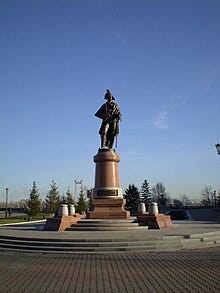
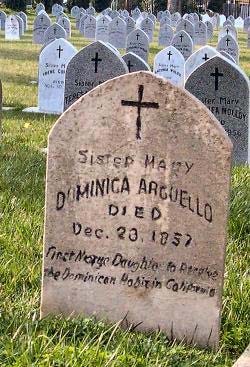
It would take years for Concha to hear what happened to Nikolai. With deep faith, she waited season after season for his return. Standing at the ramparts. But his ship never appeared. Yet, she continued to wait. Some stories suggest that she waited three years before learning about Rezonov’s death. Other versions suggest that she waited more than a decade for Nikolai’s return. In the end, she never married. She eventually became a nun in a convent and spent the rest of her life helping the poor and working with indigenous people.
On that trip across Russia in 1984, ironically, I mentioned the story to a Russian person I’d met in Moscow and he instantly knew the tale and gifted me a double vinyl album of the Soviet Rock Opera - Juno and Avos - named for the two ships that Rezonov sailed into San Francisco Bay. I was stunned. I’d never heard of it before. It is arguably, still the most famous rock opera in Russia today. It was first staged in 1981, just three years before my trip across Siberia. As of 2024, it is still being performed in different Russian theaters, with a mix of actors. It has also been the subject of novels, ballet, poems, and films over the ages.
In more recent times, people have rekindled the memory of Nikolai and Conchita’s romantic saga, exchanging soil from each of the graves to the other’s grave. On the back of a cross at Rezonov’s memorial in Krasnoyarsk it reads - "Nikolai Petrovich Rezanov 1764 — 1807. I will never forget you." On the other side of the cross it reads - "Maria Concepcion de Arguello 1791 — 1857. I will never see you again." The quotes are from the rock opera "Juno and Avos", written by Andrei Voznesensky in 1981.
![Юнона" и "Авось" / "Juno" and "Avos" by Алексей Рыбников [Alexey Rybnikov] (Album, Rock Opera): Reviews, Ratings, Credits, Song list - Rate Your Music](https://substackcdn.com/image/fetch/$s_!5aOj!,w_1456,c_limit,f_webp,q_auto:good,fl_progressive:steep/https%3A%2F%2Fsubstack-post-media.s3.amazonaws.com%2Fpublic%2Fimages%2F65ce5a41-0d37-4898-820a-b1c72f16cb77_350x335 "Юнона\" и \"Авось\" / \"Juno\" and \"Avos\" by Алексей Рыбников [Alexey Rybnikov] (Album, Rock Opera): Reviews, Ratings, Credits, Song list - Rate Your Music")

jhg
For more stories about this time - The Russian-Mexican Frontier - 1808-1842 - By W. Michael Mathes